top of page
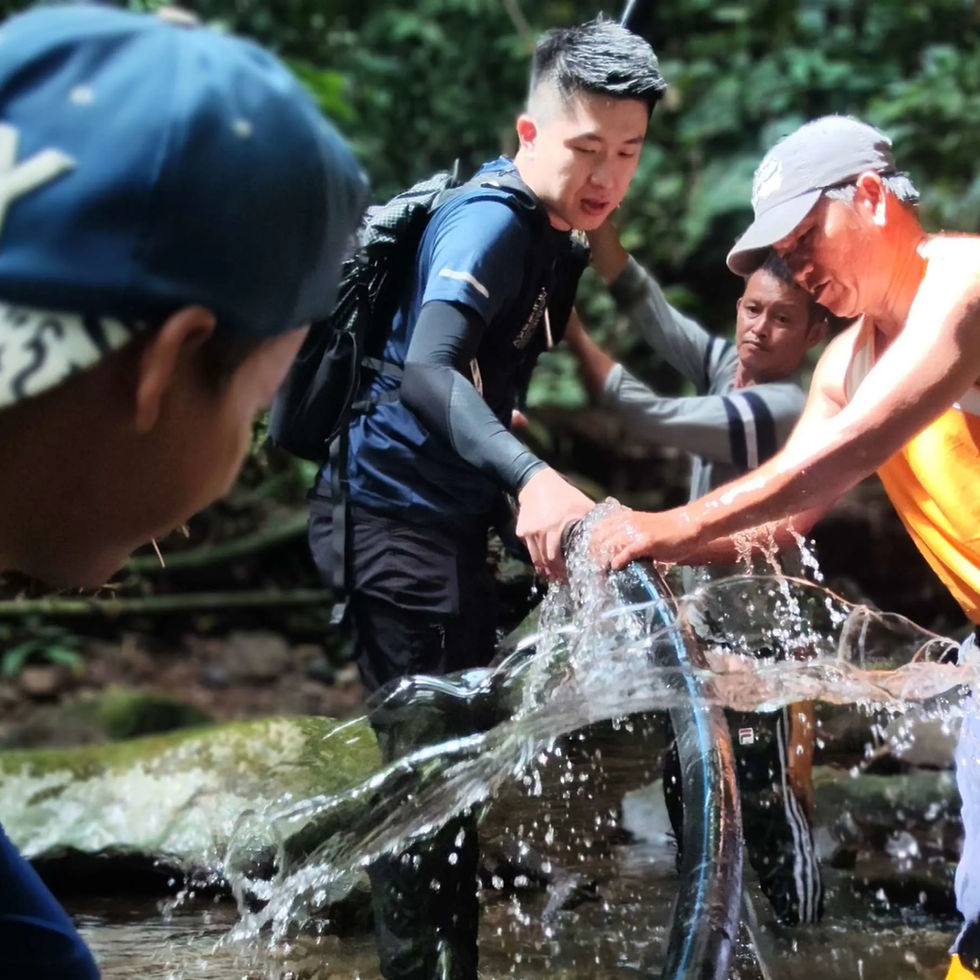
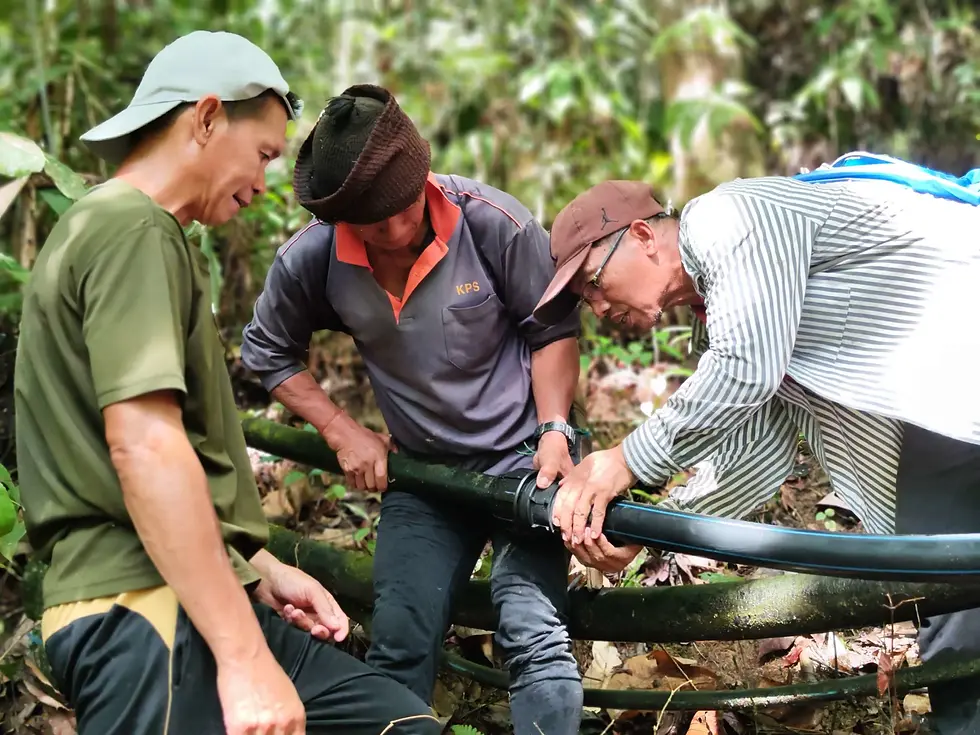
villagers connecting pipes

Why Sustainability Matters in our Rural Community Work?

"Give a man a fish, and he eats for a day. Teach him how to fish, and he feeds his family for a lifetime."
 

This principle builds the foundation and vision of Hopes Malaysias charitable work, as sustainability isn’t just a one-off goal—it is the direction for lasting change.

Why is sustainability so essential in the community work we do?

Sustainable practices ensure that the empowerment we provide creates lasting impact in our beneficiaries’ and the generations after. Our approach to helping rural communities focuses on self-reliance, long-term solutions, and practical actions that empower people for the future.

These practices are making a real difference in the lives of Sabah’s rural families, turning short-term aid into long-term progress through practical empowerment.

Volunteers
Sam and rural farmers working together connect pipes
Solar Power
Earth on Fire
rural villager carrying water pipes to water project site
rural woman happily using water directly from pipe

Sustainability Means Maximizing Resources for Lasting Change

Sustainability to us involves using resources to achieve the greatest, lasting impact for both the rural community and its surroundings. However, securing funding and such resources can be a challenging and timely process. This is the reason why our charity prioritizes practical and feasible community empowerment solutions, addressing genuine community needs for needed impact—funding to foster a community’s self-reliance and self-sustainability through CSR partnerships.

We believe dependence on continuous external aid will not address the underlying issue; handouts of short-term aid create a cycle of dependency. Sustainability provides a more effective solution.

A highlight of our initiatives, we gather the necessary resources to empower and unite rural villagers to install their gravity water system within a group. With a stable water supply, we then teach the community how to start sustainable farming and the conversion of organic waste into livestock feed, empowering themselves to be self-sufficient in combating poverty.

Instead of depending on continuous, unsustainable external aid, a community can efficiently use their local resources to sustain their crops, livestock, and themselves. This allows us to stretch our limited resources further, extending support to more rural communities in need and maximizing the impact of every bit of funding and donations we receive.

Sustainability to Impact More Rural Communities in Need

Sustainability is the key driver of Hopes Malaysia's project scalability, enabling us to replicate successful community development models and extend sustainable support to more Sabahans in need. Countless rural settlements in Sabah are struggling with severe water and food shortages, heavily relying on external aid to survive. However, this does not bring any long-term benefits and leads families back to square one.

Our gravity water initiatives not only provide essential clean water to disconnected rural families but also establish foundations for long-term self-sufficiency. This sustainable approach creates a ripple effect, empowering nearby villages and families to improve food production, take charge of their livelihoods, and build a stable, sustainable future.

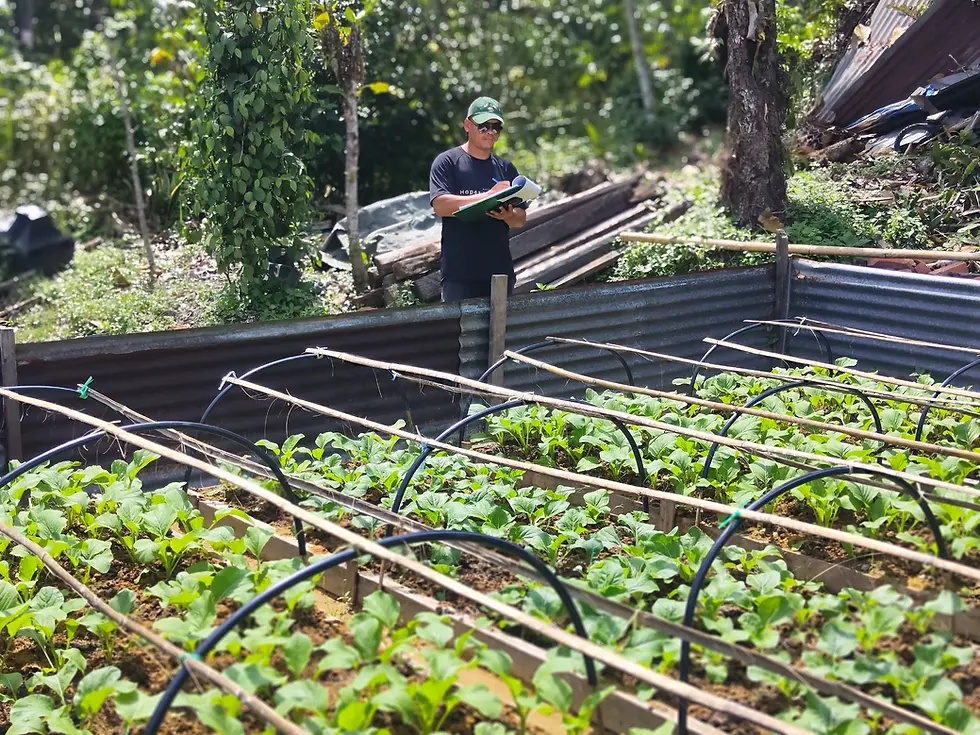
Efandi teachng villagers in farming workshop
Efandi chcking rural farming beneficiaries progress
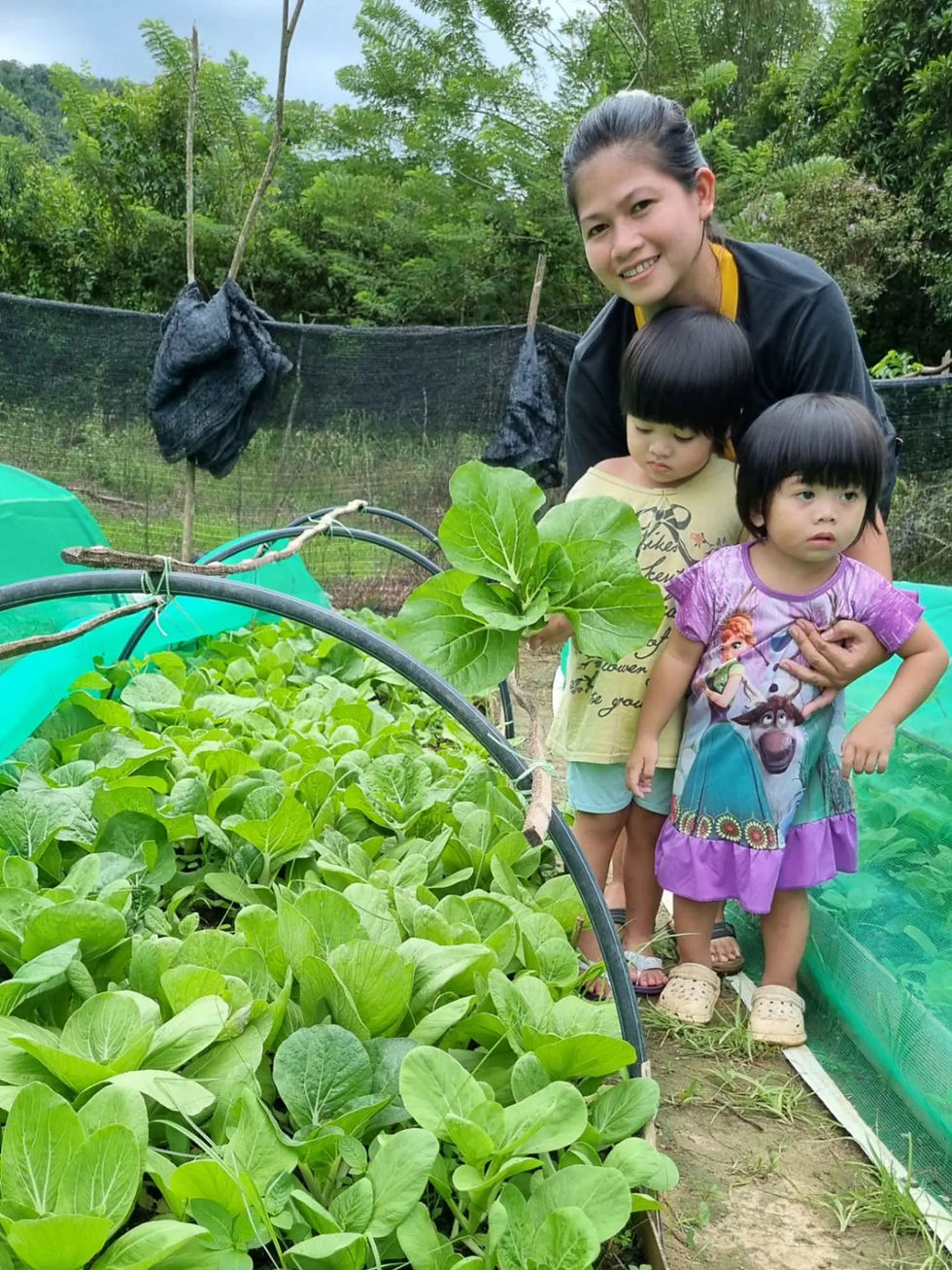
farmer with her children & her farm filled with blooming and organic vegetables.webp

We replicate our initiative's successful models from one village to another. Through our sustainable farming programs, village families are introduced to short-cycle vegetable planting, along with long-term crops like coffee through our sustainable coffee farming project. The rural community is empowered to grow their own food while also developing a sustainable source of income for their futures—long-term benefits instead of a temporary solution.

By prioritizing sustainability, we ensure that every resource—whether funds, time, or expertise—is used efficiently across different rural communities in our sustainable charitable work. Each contribution made multiplies in impact, delivering long-term benefits to the beneficiaries that go beyond the initial investment or support. This scalable model allows us to extend our reach, helping more vulnerable communities achieve self-sufficiency and long-lasting growth in rural Sabah.

rural farmers with their harvest

Sustainability Requires Breaking the Cycle of Dependency and Rural Poverty

Many rural families outside our work rely heavily on continuous external aid for their basic needs, without grasping the importance of self-reliance. This became a "tongkat" or crutch they couldn’t walk without in their daily lives. However, through effective empowerment strategies, we have helped rural families shift this mindset. A farmer who used to depend on short-term aid is now able to grow enough food not only to feed his family but also to sell to neighboring villages.

Sustainability is not just about meeting today's needs—it’s about building a brighter future. By adopting sustainable practices, these families are now creating a better life for themselves and their children. Through self-reliance, these families have significantly improved their standard of living, transforming their way of daily life. Empowering communities to help themselves is the key to breaking the cycle of dependency and poverty.

Sustainable community work is vital for long-term impact. Without sustainability, the impact of our efforts would be temporary, leaving communities trapped in a deep cycle of reliance on external aid and poverty. But by fostering sustainability, we create lasting change, enabling people to independently take charge of their livelihoods and build a brighter future for generations to come.

Sustainability matters in our community development work as it ensures that every effort we make leads Sabah’s rural communities to thrive as self-sustainable communities in the long-term future.

What Real Impact Does Charity in Sabah Create for Rural Communities?

Charity in Sabah matters because it helps rural families solve daily problems that keep them trapped in poverty. When support is practical and long-term, it can improve access to clean water, food, education, and safe village connections, giving communities the chance to become more self-reliant.


This impact is easiest to understand when you look at how rural life actually works in remote parts of Sabah.


For many families, poverty is not caused by a lack of effort. It is caused by limited access. A village may have hardworking parents, school-going children, and land for farming, but still struggle because basic systems are missing.


These are some of the real barriers rural communities face:


  • No reliable clean water supply

  • Unsafe or damaged bridges

  • Poor access to schools and learning materials

  • Low food security

  • Few stable income opportunities

  • High dependence on outside aid


When charity directly addresses these root problems, the results can be life-changing.

Clean water changes daily life first

In remote villages, clean water is not just about drinking. It affects nearly every part of family life.


When a household has no proper water system:


  • women and children may spend hours collecting water

  • hygiene becomes harder to maintain

  • farming becomes less productive

  • health risks increase

  • time is lost every single day


That is why water projects create one of the fastest and most meaningful forms of impact. With access to a gravity water system, families can spend less time surviving and more time improving their lives.


You can see this kind of work through Hopes Malaysia’s clean water project and also learn more about the wider issue in clean water in rural Sabah.

Charity becomes stronger when it leads to food security

Food aid helps in the short term, but food security creates stability.


When rural families are taught how to grow short-cycle crops, manage land better, and reduce waste through practical farming methods, they gain something more valuable than temporary relief. They gain control.


This is why sustainable charity matters. It does not stop at giving. It helps families build a system that keeps working after the initial support is over.


For example, when a family grows vegetables near home:


  • grocery costs can go down

  • children eat more regularly

  • extra produce can be sold

  • the household becomes less vulnerable during hard times


This is one reason Hopes Malaysia invests in sustainable farming for food security and on-the-ground support through its sustainable farming project.

Safe infrastructure protects lives and keeps communities connected

A damaged bridge is not just an infrastructure issue. In rural Sabah, it can affect school attendance, access to food, safety during bad weather, and movement between villages.


For school children, parents, and elderly villagers, crossing unsafe routes every day can become a serious risk. When bridges are repaired, the impact is immediate and practical.


Bridge repair helps communities by:


  • improving safe access to school

  • making travel less dangerous

  • helping families move goods more easily

  • keeping villages connected during rain and floods


This is where targeted charity has a very direct effect on daily safety and mobility. You can explore this through Hopes Malaysia’s rural bridge repair project.

Education support helps children move beyond survival

Charity in Sabah also matters because poverty is not only physical. It affects learning confidence, future job chances, and long-term social mobility.


When children in rural communities get help with reading, school materials, and basic learning support, the effect goes beyond the classroom. Education gives children a better chance to break out of the same hardship their parents faced.


Even simple support can make a real difference:


  • better reading ability

  • stronger classroom confidence

  • improved school participation

  • more hope for future work opportunities


Support in this area is part of lasting community development, not just short-term welfare. Related work can be seen through Hopes Malaysia’s rural education empowerment project.

Practical Impact of Charity in Sabah

Here is what meaningful charity can look like in real rural communities:


Area of support

Immediate impact

Long-term impact

Clean water

Easier access to water for daily use

Better health, time saved, stronger farming ability

Sustainable farming

More food at home

Lower expenses, added income, stronger food security

Bridge repair

Safer village movement

Better school access and stronger community connection

Education support

Improved learning tools and reading skills

Better future opportunities for children


This is why charity in Sabah matters so much. It does not only help someone get through today. It helps create the conditions for a more stable tomorrow.

Why Supporting Rural Sabah Creates Wider Change

When one rural family becomes more stable, the benefit often spreads beyond that single household.


A working water system helps whole villages.
A farming project can inspire nearby families.
A repaired bridge can help hundreds of people move safely.
A child who learns better today may have more choices as an adult.


That wider effect is what makes community-based charity so important. It creates shared progress, not isolated relief.


If you want to understand how this work fits into Hopes Malaysia’s wider mission, visit Our Work or learn more about why rural Sabah remains an urgent focus area.


If you would like to directly support this impact, you can contribute through the donate page or explore Hopes Malaysia’s main project page.

bottom of page