Sustainable Farming and Food Security for Rural Families in Malaysia

Updated: Sep 2

Every day, families in rural Malaysia wake up not knowing if they will have enough food on the table. For many, this is not a temporary problem. It is a daily reality shaped by poverty, poor soil, and limited access to resources.
But something is changing.
Across Malaysia, especially in Sabah and other rural regions, sustainable farming programs are giving families a real way out. These are not short-term food handouts. They are long-term solutions that teach families how to grow their own food, earn income, and build stability for the future.
This article explains what these programs look like on the ground, why they matter, and how you can help support them.
Why Sustainable Farming Matters for Rural Communities
The Challenges Facing Rural Families
Life in rural Malaysia comes with challenges that many people in the city never think about.
Here is what families in these communities often deal with:
Limited access to nutritious food — Many villages are far from markets. Fresh vegetables and protein-rich food are hard to get.
Dependence on external aid — Without a steady income or way to produce food, families rely on donations or government support just to survive.
Poor soil quality — In areas like parts of Sabah, the soil is not ideal for farming without proper guidance and tools.
Lack of farming knowledge — Many families want to grow food but do not know the right methods. This leads to failed harvests and wasted effort.
No capital to start — Seeds, tools, irrigation equipment — these things cost money that most rural families simply do not have.
The result? A cycle that is hard to break. Families stay poor. Children grow up malnourished. Communities stay stuck.
How Farming Initiatives Create Long-Term Impact
Short-term food aid keeps people alive. But it does not fix the root problem.
Sustainable farming programs do something different. They hand families the tools, knowledge, and support to feed themselves — and keep feeding themselves for years to come.
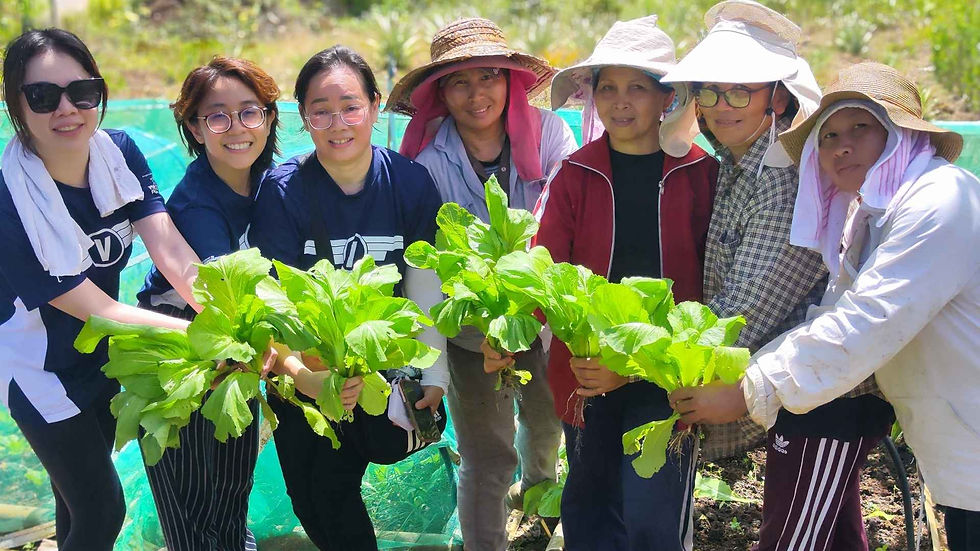
When a family learns to grow their own vegetables, raise fish, and sell surplus produce, they stop depending on aid. They become self-sufficient.
This is exactly what organizations like Hopes Malaysia are working toward through their agriculture and food security project. The goal is not charity. It is empowerment.
Key Sustainable Farming Programs in Malaysia
Community Farming Projects
Some of the most effective farming efforts in Malaysia are community-led.
Organizations like APPGM-SDG have rolled out over 250 community farming projects across Malaysia. These projects localize the United Nations Sustainable Development Goals (SDGs) by making food security a local priority, not just a global talking point.
What makes community farming work:
Families farm together and share the workload
Knowledge is passed down within the community
Resources like tools and seeds are shared, lowering individual costs
There is a built-in support system when things go wrong
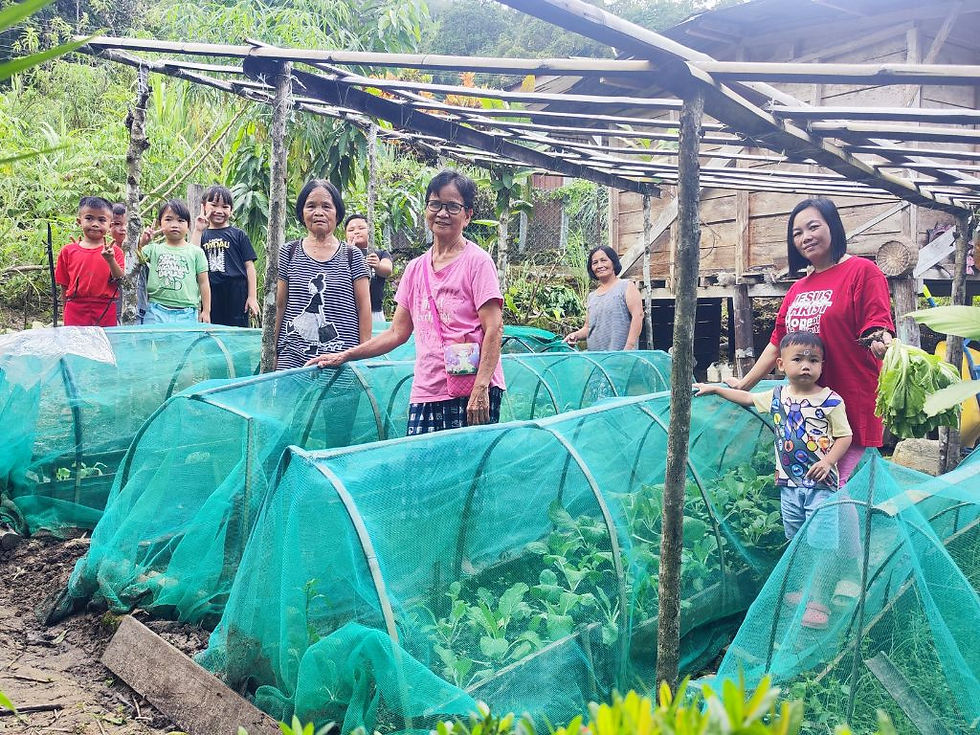
In places like Kota Belud, Sabah, community farming has helped families who previously had almost no access to fresh produce start growing vegetables and raising fish on their own land.
Skill Training and Resources for Farmers
One of the biggest barriers to farming is not having the right knowledge.
That is why the best programs do not just give people seeds and walk away. They invest in training.
Here is what proper farmer training programs typically include:
Training Area | What Families Learn |
Organic farming | How to grow food without expensive chemicals |
Water management | How to use gravity water systems and simple irrigation |
Aquaculture | How to raise Tilapia fish as a food and income source |
Soil preparation | How to improve poor soil using natural compost |
Crop rotation | How to grow high-yield crops in short cycles |
Post-harvest handling | How to store and sell surplus produce |
Programs like PRUCare Farming (run by Prudential Malaysia) helped 60 families between 2022 and 2023 grow both vegetables and fish. These families did not just get food. They got skills they will use for the rest of their lives.
Climate-Resilient Agriculture
Malaysia's weather is not always predictable. Droughts, floods, and shifting rainfall patterns can destroy crops and leave families with nothing.
That is why the best farming programs today focus on climate-resilient agriculture — methods that work even when the weather does not cooperate.
Key practices include:
Drought-resistant crops — Choosing plant varieties that need less water and can survive dry spells
Efficient irrigation — Using drip irrigation or gravity-fed water systems to reduce water waste
Raised bed farming — Protecting crops during floods by planting on raised ground
Shade netting — Protecting plants from extreme heat or heavy rain
The Malaysian Relief Agency (MRA) has been actively promoting these techniques in rural areas. The idea is simple: if your farming methods can handle climate shocks, your food supply stays stable no matter what.
Overcoming Local Challenges
Not every farming program succeeds right away. Rural communities face real obstacles that take time and support to overcome.
Some of the biggest barriers include:
Poor soil — Sandy or nutrient-poor soil in some regions does not support good harvests without soil improvement
No starting capital — Families need seeds, tools, and basic infrastructure to begin farming
Limited technical knowledge — Without guidance, even motivated families can make costly mistakes
Geographic isolation — Remote villages are hard to reach, making training and supply delivery difficult
This is where NGO support becomes critical.
Organizations like the Global Peace Foundation (GPF) have worked directly with communities like the Orang Asli, helping them overcome these exact barriers. They bring in agronomists, donate starting materials, and provide ongoing coaching — not just a one-time visit.
Impact on Rural Families
Economic Empowerment Through Farming
When families can grow more than they need to eat, they can sell the extra.
This might sound simple. But for a family living in poverty, selling even a small amount of vegetables or fish at the local market can make a huge difference.
The economic chain looks like this:
Family receives training and starting materials
Family grows food for home consumption
Surplus produce is sold at local markets
Income is used to buy other household needs
Family reinvests in expanding their farm
Over time, dependency on aid is reduced or eliminated
Over months and years, this income builds up. Families can afford school fees, medical care, and home repairs. They stop living in survival mode and start planning for the future.
This is what real economic empowerment looks like — not a handout, but a pathway.
Improved Nutrition and Health
Growing your own food does not just help your wallet. It changes what you eat.
Rural families who join farming programs shift from a diet of plain rice and processed food to meals that include:
Fresh vegetables like kangkung, pumpkin, and leafy greens
Protein-rich fish like Tilapia, which is easy to raise in small ponds
Legumes and root crops that provide energy and nutrients
Better nutrition has a direct impact on health. Children grow stronger. Adults have more energy to work. Elderly family members face fewer diet-related illnesses.
This is especially important for young children. Malnutrition in the first five years of life has lifelong effects on brain development and physical growth. Getting fresh food to these families early can change the entire trajectory of a child's life.
Building Resilience
Here is something that often goes unnoticed when we talk about farming programs: they build community resilience.
When a family or village becomes food self-sufficient, they are protected from things outside their control, such as:
Price spikes in the city affecting food costs
Supply chain disruptions (like those seen during COVID-19)
Economic downturns that reduce income and buying power
Natural disasters that cut off roads and access to markets
A community that grows its own food can ride out these shocks. They do not panic when prices go up or when a road floods. They have food in the ground and income from their harvest.
According to Hopes Malaysia, this kind of resilience is one of the most important long-term benefits of sustainable farming programs.
How Donations Support Food Security Projects
Contributing to Sustainable Farming Initiatives
None of this happens without funding.
Training programs, seeds, tools, irrigation systems, soil improvement — all of it costs money. And for organizations working in remote rural areas, the logistical costs alone can be significant.
When you donate to a sustainable farming project, your money goes toward:
Training workshops for families on farming techniques
Starter kits with seeds, tools, and basic equipment
Infrastructure like simple irrigation systems and fish ponds
Ongoing support from agricultural experts and field workers
Monitoring and follow-up to make sure families stay on track
Even a small donation can help a family get started. And once a family starts, the impact compounds over years.
You can directly support this work through Hopes Malaysia's sustainable farming project.
Supporting Related Community Projects
Food security does not exist in isolation.
A family might learn to grow food, but if they do not have clean water, they cannot irrigate their crops properly. They cannot cook safely. Their children get sick more often.
This is why clean water projects and farming programs go hand in hand. When both are funded, the impact is far greater than either one alone.
Supporting a range of rural development initiatives — farming, clean water, sanitation — creates conditions where families can truly thrive, not just survive.
Encouraging Long-Term Change
The most important thing about donor-supported farming programs is that they are designed to end.
The goal is not to create communities that depend on NGOs forever. The goal is to work with communities until they no longer need outside help.
That is the difference between sustainable development and permanent aid.
When you donate to rural community development initiatives in Malaysia, you are not just feeding a family today. You are investing in a future where that family does not need to be fed by anyone else.
That is the most powerful kind of giving.
Conclusion
Sustainable farming is not just about crops and fish ponds. It is about dignity, independence, and hope for families who have had very little of any of those things.
Across rural Malaysia, farming programs are proving that long-term change is possible. Families are learning new skills. Communities are growing their own food. Income is rising. Children are eating better. Villages are becoming resilient.
But these programs need support to keep going and to reach more families.
Here is how you can take action right now:
🌱 Learn more about the Hopes Malaysia sustainable farming project
💧 Explore related work in clean water access for rural communities
Every ringgit you give goes toward real people, real training, and real food on real tables.
The change starts with you.
Comments